The Impact of Sports Science on Football Player Performance
Sports science has changed how football teams prepare players, assess form and interpret match performance. Training is no longer guided only by observation and instinct. Coaches can combine match footage, fitness testing, player tracking data, medical information and tactical context to make more informed decisions.
For readers interested in football scores and analysis, the value of sports science is practical. It helps explain why a team presses effectively for 90 minutes, why a key midfielder loses influence late in a match, or why player availability can alter a predicted result. Science cannot remove uncertainty from football, but it can improve the quality of the questions teams ask before, during and after a game.
What Is Sports Science in Football?
Sports science in football applies research and measurement to player development, preparation, recovery and performance evaluation. It brings together sports physiology, biomechanics, psychology, nutrition, strength and conditioning, medicine and football performance analysis.
A sports science department may include performance analysts, physiotherapists, strength and conditioning coaches, nutritionists, sports scientists and medical staff. Their work supports the head coach rather than replacing coaching judgment. A sprint test, for example, becomes useful only when staff understand the player’s position, tactical role, recent workload and injury history.
The discipline generally serves four purposes:
- Prepare players: Build the physical qualities required for acceleration, repeated running, contact and technical execution.
- Measure performance: Track whether a player’s output matches the demands of their role and the team’s game model.
- Manage availability: Reduce avoidable injury risk and help players return safely after injury or illness.
- Improve decisions: Connect individual data with tactical analysis, opposition strength and match context.
This approach also changes how player development is judged. A full-back may record fewer tackles than usual but still perform well if their positioning prevents the opponent from progressing. Sports science provides evidence; coaches must interpret what that evidence means in football terms.
Using Data to Measure Player Performance
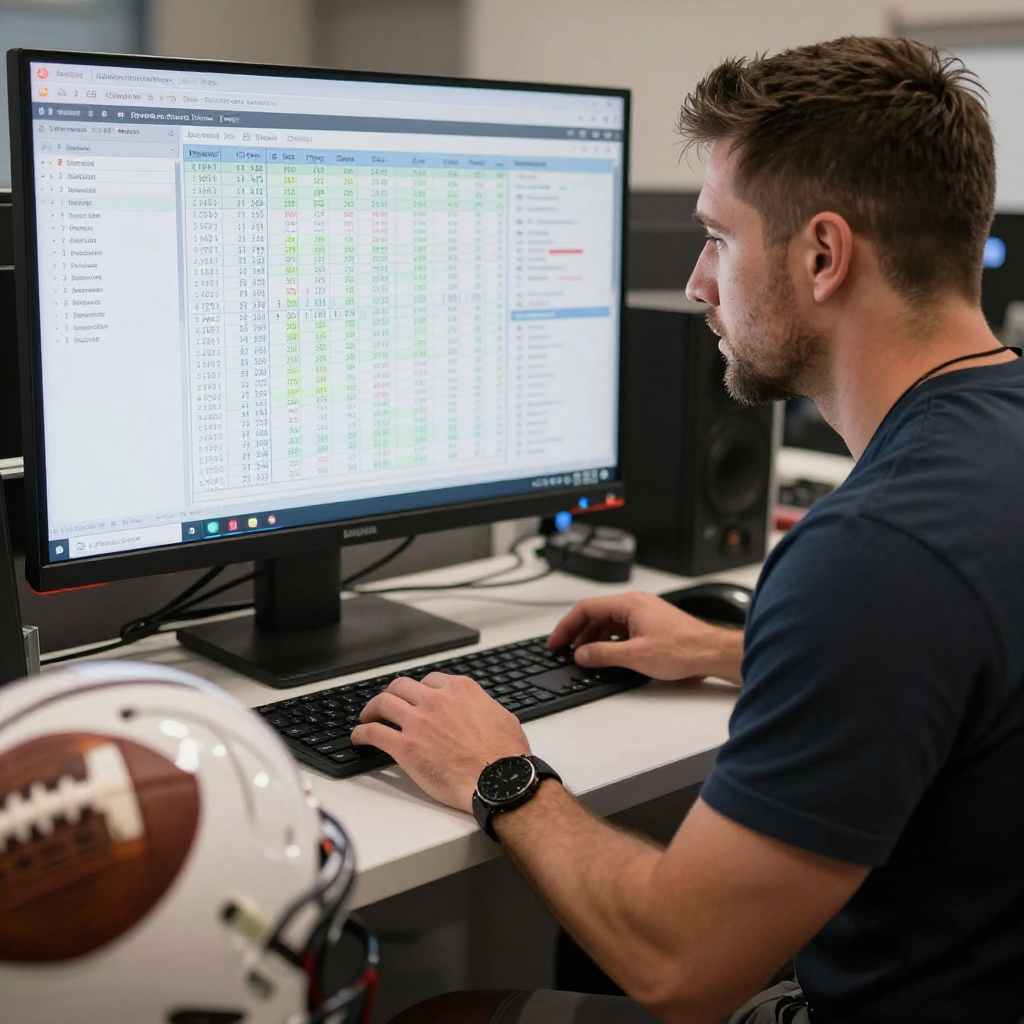
Football performance analysis uses tracking data, physical measurements, technical actions and video to evaluate what players do, where they do it and how consistently they do it. The strongest analysis combines several sources instead of relying on one headline statistic.
Player tracking data can record total distance, high-speed running, sprint efforts, acceleration, deceleration and positional location. These measures help staff understand workload and tactical behaviour. A winger who covers 10 kilometres is not automatically more effective than one who covers less; the timing and purpose of those movements matter.
Analysts commonly examine:
- Physical metrics: Distance covered, maximum speed, high-speed actions, accelerations and decelerations.
- Technical actions: Pass completion, progressive passes, carries, shots, crosses, tackles, interceptions and duels.
- Tactical behaviours: Distance between units, pressing triggers, defensive recoveries, occupation of space and support around the ball.
- Efficiency measures: Expected goals, expected assists, possession value and the success rate of actions under pressure.
Context is essential. A central midfielder may attempt fewer forward passes against a deep defensive block because fewer opportunities exist. A striker’s shot count may rise after their team falls behind, while a goalkeeper’s pass completion may reflect a cautious build-up strategy. Good analysts compare performance with role, opponent, scoreline, minutes played and tactical instructions.
This is why performance metrics should be treated as evidence rather than a final verdict. A dashboard may identify a drop in sprint output, but match footage can reveal whether the player was following a tactical instruction, protecting a lead or managing fatigue.
The Role of Fitness, Conditioning, and Recovery
Fitness, conditioning and recovery improve football performance by helping players repeat high-quality actions throughout training and matches. The goal is not simply to make players run farther; it is to prepare them for the specific demands of their position and playing style.
Strength and conditioning programmes may target acceleration, change of direction, lower-body strength, trunk control, power and repeated-sprint ability. A pressing team may need frequent explosive efforts, while a possession-based side may place greater emphasis on repeated movement to create passing angles and immediate counter-pressing.
Training load is often monitored through external measures, such as running volume, and internal measures, such as heart rate or perceived exertion. Staff can then compare a player’s recent workload with their normal pattern. A sudden increase may raise fatigue and injury concerns, while too little intensity can leave a player underprepared for match demands.
Recovery and nutrition
Recovery includes sleep, hydration, nutrition, mobility work, medical treatment and carefully planned rest. Carbohydrates help restore energy availability after demanding sessions, while sufficient protein supports muscle repair. These factors support readiness, but they cannot compensate for poor tactical preparation or inadequate training.
A practical weekly plan might reduce heavy lower-body work before a match, use video to replace some physical training and provide individual conditioning for players who need extra minutes. The trade-off is that reducing workload may protect freshness while limiting opportunities to develop fitness. Staff must balance both aims.
Biomechanics and Injury Prevention
Biomechanics examines how players move, helping staff identify inefficient technique, excessive physical stress and patterns associated with injury risk. It supports injury prevention by turning movement observations into practical changes in training and technique.
Analysts may review running mechanics, landing control, cutting movements, kicking technique and the balance between the hips, knees, ankles and trunk. Video, force measurements and movement screening can highlight whether a player consistently lands with poor control or places excessive load on one side of the body.
That information can shape an individual programme. A player returning from a hamstring injury may progress from controlled running to high-speed efforts, then to changes of direction and competitive drills. Medical and performance staff monitor symptoms, workload and movement quality at each stage instead of using a calendar date as the only guide.
Injury prevention has a direct effect on football analysis because availability changes team quality. When a starting centre-back is absent, the replacement may alter the defensive line, build-up patterns and set-piece assignments. The effect is tactical as well as medical.
Science still cannot predict every injury. Contact incidents, congested schedules, individual differences and chance remain significant factors. The sensible objective is risk management: identify modifiable problems, improve physical preparation and respond early to warning signs.
How Sports Science Shapes Tactical Analysis
Sports science shapes tactical analysis by showing whether players have the physical capacity to execute a game plan and how that plan changes under fatigue. Coaches can connect running patterns with pressing, formations, substitutions and match phases.
For example, a team may begin with an aggressive high press. Tracking data can show whether the front line closes space while the midfield follows, or whether gaps open between the units. Video then explains why: perhaps the winger presses from the wrong angle, the full-back cannot advance safely, or the striker lacks support.
Physical evidence can also inform substitutions. A decline in repeated accelerations may suggest that a wide player is struggling to recover defensively. Yet the decision still depends on the scoreline, the opponent’s threats, available replacements and the player’s tactical importance.
- Pressing analysis: Measures when and where pressure begins, how quickly support arrives and whether the opponent loses possession.
- Running patterns: Shows whether players create width, attack space behind the defence or protect central areas.
- Formation analysis: Reveals how the team’s shape changes with and without the ball.
- Substitution planning: Combines fatigue indicators with tactical match-ups and likely game scenarios.
The best process is a three-part loop: data identifies a pattern, video explains it, and coaching decides what to change. Numbers alone rarely tell a complete tactical story.
Linking Sports Science to Football Scores and Results
Sports science influences football scores indirectly by improving preparation, player availability, fatigue management and tactical execution. It can strengthen the basis for match analysis, but it cannot guarantee a result or predict an exact score.
Consider two teams with similar technical quality. One may have a congested schedule, several players returning from injury and a reduced ability to press late in matches. The other may arrive with a stable starting XI and strong recovery between fixtures. Those factors can affect intensity, concentration and substitution options.
For score analysis, useful questions include:
- Are important players fully fit, or are they likely to have restricted minutes?
- Has the team recently faced an unusual training or travel burden?
- Does its tactical system depend on repeated high-intensity running?
- Can the likely substitutes maintain the same defensive and attacking structure?
- Do recent performance metrics reflect sustainable form or a small sample of matches?
These questions improve interpretation of form. They do not turn a probability into certainty. A rested team can concede from a set piece, lose a player to an early red card or face an exceptional performance from the opposition goalkeeper. Football outcomes remain influenced by skill, psychology, teamwork, tactics and chance.
The Future of Sports Science in Football
The future of sports science in football will centre on integrated data, personalised training and faster feedback between analysts, coaches and medical staff. Teams are increasingly combining tracking systems, wellness reports, video, match events and physical testing in a single performance picture.
Personalisation will become more important. Two players may complete the same session but respond differently because of age, position, playing history, recovery capacity or previous injuries. Training plans can therefore become more individual without abandoning the team’s shared tactical objectives.
Real-time analysis may also support in-game decisions, although speed creates a danger: too much information can distract staff. A useful system should answer a specific question, such as whether the team can continue pressing effectively, rather than produce endless alerts.
Coaching judgment remains central. Data can reveal that a player’s output has fallen, but a coach understands confidence, communication, leadership and the emotional state of the match. The strongest football departments combine scientific measurement with experience, observation and honest dialogue.
Frequently Asked Questions
How does sports science improve football performance?
It improves performance by supporting targeted training, workload management, recovery, nutrition, injury prevention and evidence-based tactical decisions. Its effect is strongest when staff interpret data alongside video and coaching knowledge.
What data do football performance analysts use?
Analysts use player tracking data, running metrics, technical actions, event data, video, expected goals, positional information and workload reports. They compare these measures with the player’s role, opponent and match context.
Can sports science help prevent football injuries?
Yes. Biomechanics, movement screening, workload monitoring and progressive rehabilitation can identify modifiable risks and support safer training. They reduce risk rather than eliminate every injury.
How does player fitness affect match results?
Fitness affects the ability to maintain pressing, recover defensively, repeat sprints and execute technical actions late in games. Its influence depends on tactics, opposition quality, player skill and match events.
Can sports science predict football scores?
Sports science can improve probability-based analysis by highlighting fitness, availability, fatigue and tactical factors. It cannot reliably predict an exact football score because uncertainty and chance remain part of the sport.