How Football Clubs Build Their Youth Academies
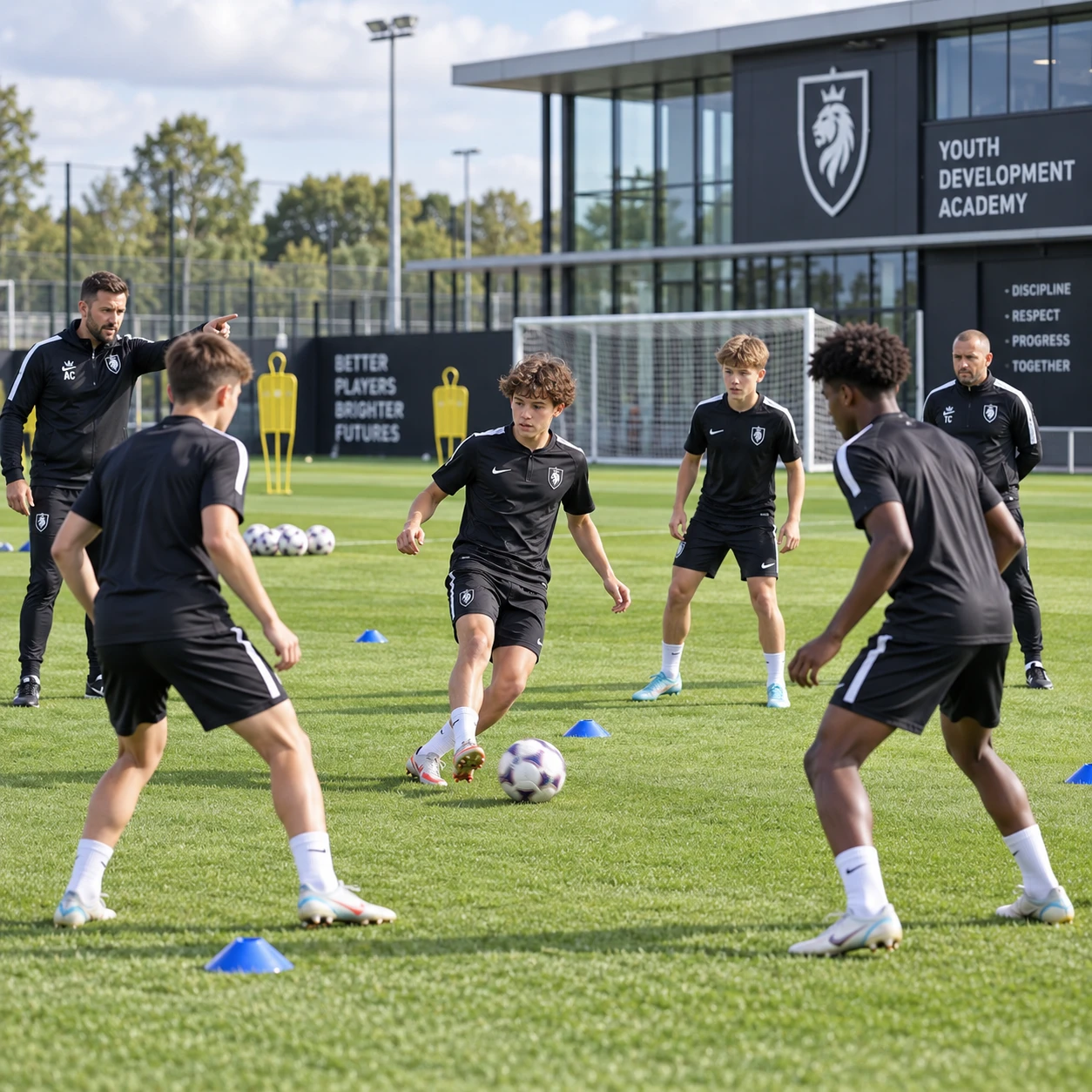
A football club’s youth academy is a long-term project: it brings together recruitment, coaching, education and competitive opportunities to help young players progress. Its purpose is not simply to find the next first-team star. A well-built academy supports the club’s playing identity, adds depth to the squad and gives local talent a route into professional football, while accepting that development is uncertain and many players will take different paths.
What a youth academy is designed to do
A youth academy develops young players through a planned pathway that connects age-group football with the club’s first team. It can support a consistent playing philosophy and, when graduates reach senior football, help the club build squad options from within.
The academy’s role depends on the club’s wider strategy. A team that values possession and building from the back may prioritize players who are comfortable receiving under pressure. Another club may focus more on pressing, transition speed or physical duels. These preferences shape recruitment and coaching, but a clear club philosophy should guide learning rather than force children into a rigid tactical template too early.
Academies can also strengthen a club’s ties to its community and provide a structured route for local players. Their contribution to the first team may be direct, through graduates earning regular minutes, or indirect, through players who develop elsewhere after leaving the academy. A useful measure is therefore not just how many prospects reach the senior squad, but whether the academy provides high-quality development and sensible next steps for different players.
Finding and recruiting young players
Football clubs recruit young players through scouting, recommendations, trials and local relationships, with methods shaped by their resources and rules. Recruitment teams look for potential and learning capacity, not only performance in a single match.
Youth recruitment and scouting may begin with local grassroots football, school competitions, regional leagues or contacts with community coaches. Scouts observe players over time where possible, looking at technical ability, decision-making, movement, attitude and how a child responds to feedback. Physical growth can distort comparisons between players of the same age, so clubs need to consider maturity as well as current size or speed.
Trials give a club a closer look, but they are only a snapshot. A player may perform differently in a new environment, and access to transport, coaching or competitive teams can affect who gets noticed. Clubs vary in how they invite players, assess them and make offers; age regulations and registration requirements also differ by country and competition.
Recruitment works best when it asks three questions: Can the player perform now? What might they learn next? Is this environment right for them and their family? That last question matters. A technically gifted child may not benefit from a move that creates excessive travel, pressure or disruption to education.
Building the academy structure
An academy structure organizes players into age-group teams, assigns specialist staff and provides facilities for regular training and competition. The details vary, but the goal is to give each age group appropriate coaching and a clear development plan.
At younger ages, sessions often emphasize ball mastery, coordination, decision-making and enjoyment. Older groups typically face more detailed tactical work, physical preparation and demanding match schedules. Clubs need to adapt the level of instruction to the players’ stage of development rather than assume that a younger version of the first team is the right model.
Coaching staff may include age-group head coaches, assistant coaches, goalkeeper coaches, analysts, strength and conditioning specialists, medical professionals and player-care or education staff. The exact mix depends on the club’s scale. Clear communication between coaches helps players move between teams without having to relearn basic expectations at each step.
Training facilities support this structure through pitches, indoor spaces, gym areas, treatment rooms and classrooms. Good facilities help, but they do not guarantee good development. A smaller club can still create a strong environment through consistent coaching and useful match opportunities; a large complex can underdeliver if staff lack time to coordinate or players rarely receive meaningful feedback.
Developing players on and off the pitch
Academies develop players through coaching, age-appropriate match experience, physical preparation and support for education and wellbeing. The aim is to build the whole player while protecting long-term health and keeping options open beyond football.
Training should connect technique to decisions made in games. Rather than rehearse a passing pattern without pressure, coaches can create small-sided exercises that ask players to scan, choose when to play forward and react when possession changes. Video analysis can help older players review positioning or decision-making, but feedback needs to be specific and manageable.
Matches test whether a skill transfers under pressure. Clubs may use league fixtures, tournaments, friendlies and internal games to give players different challenges. A player who dominates one age group may need a harder environment; another may benefit from regular minutes at a lower level instead of occasional appearances in a stronger side.
Physical preparation should reflect age, growth and workload. Medical and performance staff monitor injuries, recovery and training demands, while coaches avoid treating every player’s development timeline as identical. Education, safeguarding, mental wellbeing and family communication also matter. The demands of a football pathway can be intense, and a player’s identity should not depend entirely on selection or results.
Creating a pathway to the first team
A pathway to the first team gives academy players gradual exposure to senior football through advanced age groups, reserve or development teams, training sessions, loans or competitive debuts. Progress depends on readiness and opportunity, not age alone.
For some players, the next step is a reserve side or an under-21 competition. Others may train with the senior squad to experience its tempo and standards before they are ready to play. A loan can offer regular minutes in a different club or league, although it brings a trade-off: the parent club gives up some day-to-day control over coaching and playing time.
First-team coaches and academy staff need to share information about role, strengths and areas for improvement. A full-back might train with the senior side because the club needs cover, but the decision should also account for whether the player can handle the tactical and physical demands. Progression is more sustainable when the next step has a clear purpose.
Academy graduates can influence squad depth and playing identity. A locally developed player who understands the club’s principles may provide a useful alternative in a congested season. Still, a club should not promote a player merely to claim an academy success; senior minutes need to serve the player’s development and the first team’s needs.
Measuring progress and managing challenges
Clubs assess academy progress through player development, retention, education and movement into higher levels, including first-team opportunities. No single statistic captures success, because young players develop at different speeds and many will not become senior professionals.
Useful indicators include technical and tactical growth, attendance and wellbeing, progression between age groups, injury patterns, competitive minutes and the quality of transitions out of the academy. Clubs can also review whether players who leave find suitable opportunities elsewhere. First-team appearances matter, but they should be interpreted alongside context: squad vacancies, coaching changes and the level of competition all affect who gets selected.
Academies face substantial operational demands. Recruitment and staffing require planning, facilities need maintenance, and long journeys or uncertain selection can affect families. Costs and outcomes differ widely between clubs, so broad claims about what an academy should spend or how many graduates it should produce can be misleading.
A common mistake is judging a young player by early physical advantage. It can lead clubs to overlook later developers; tracking technical progress and decision-making over time gives a fairer picture. Another is copying the first team’s system at every age. That may create tactical familiarity, but it can narrow learning if young players are not exposed to different roles and problems. The strongest academy strategy balances a recognizable club identity with flexible, individual development.
Frequently asked questions
How do football clubs scout young players?
Clubs scout through local matches, youth leagues, community contacts, recommendations and trials. Scouts assess a player over time when possible, considering technique, decisions, attitude and development potential as well as current performance.
At what age can a player join an academy?
The age depends on the country, competition rules and club programme. Some clubs offer introductory development activities for young children, while formal academy recruitment and registration follow local regulations.
How do academy players reach the first team?
Players may progress through age-group sides, reserve or development teams, senior training, loans and first-team appearances. Coaches assess readiness, role fit and available opportunities at each step.
Do all clubs build academies in the same way?
No. Academy size, staffing, facilities, recruitment reach and playing philosophy vary with the club’s resources, location and strategy. The common aim is to provide a structured environment for development, but there is no single model that suits every club.