Canadian vs. U.S. Online Casino Payment Methods: A Cross-Border Guide to Fast, Secure Deposits and Withdrawals in 2026
I've put a serious amount of time into researching online casino payment systems on both sides of the 49th parallel — and honestly, the differences are stark enough that I couldn't not write this guide. Whether you're an American player who's had a card declined mid-deposit or a Canadian wondering what your neighbors to the south actually deal with, this breakdown covers the full picture. In 2026, the gap between Canada's payment ecosystem and the U.S. one has never been more visible — or more worth discussing.
Why Payment Methods Differ So Much Between Canadian and U.S. Online Casinos
It really comes down to one core difference: regulatory philosophy. Canada handles online gambling at the provincial level, with licensed platforms operating under clear legal frameworks in Ontario, British Columbia, and beyond. That clarity matters — Canadian banks aren't spooked by gambling transactions the way many U.S. financial institutions still are in 2026.
The U.S. picture is messier. The Wire Act of 1961, a web of state-level rules, and persistent banking compliance anxiety mean that even in fully regulated states like New Jersey, Michigan, and Pennsylvania, a real chunk of credit card transactions still get rejected at the processor level. American banks routinely flag gambling deposits as high-risk, creating friction that Canadian players just don't run into. That's not a minor annoyance — it's a structural problem that shapes the entire payment experience for U.S. players.
The Canadian Advantage — Interac and a Unified Banking System
If one thing defines the Canadian online casino payment experience, it's Interac. This homegrown interbank network ties together virtually every major Canadian financial institution, building a trusted, direct line between a player's bank account and their casino balance. No third-party processor wedged in the middle. No credit card company skimming fees. No guessing whether the transaction will actually land.
For Canadian players trying to find platforms that genuinely use this system well, resources like the best interac online casinos Canada guide from Global News offer a curated list of tested, fast-payout sites evaluated specifically for their Interac support. It's the kind of resource I'd want for every payment method in every market — but most markets don't have anything close to it.
How Interac e-Transfer Works for Casino Deposits and Withdrawals
The mechanics are refreshingly simple. A Canadian player wanting to deposit at a supported casino initiates an Interac e-Transfer straight from their online banking portal. The casino picks it up — usually within minutes — and credits the account. In 2026, most major Ontario-regulated casinos process Interac deposits in under five minutes. That's not marketing copy; it's just how the system works.
Withdrawals follow the same logic. The casino fires an e-Transfer back to the player's registered email address, which then gets deposited into their bank account — often automatically if auto-deposit is set up. The full withdrawal cycle at the fastest platforms sits between 30 minutes and 24 hours. Put that next to the 3–5 business day bank wire timelines you commonly see in the U.S. market, and it's obvious why Canadian players treat Interac as the baseline expectation rather than a perk.
Security Features That Make Interac Stand Out
Interac runs on bank-level 256-bit encryption, and every transaction requires two-factor authentication through the player's existing banking credentials. There are zero chargebacks possible — once the payment goes through, it's done. That finality actually works in players' favor: casinos save on chargeback overhead and frequently pass those savings along as zero transaction fees.
Fraud rates with Interac are substantially lower than with card-based methods. Because the whole system operates inside the Canadian banking infrastructure, there's no exposure to the card-not-present fraud that makes credit card transactions a consistent weak point. Your financial details never leave the banking environment you already rely on. That's a genuinely meaningful security advantage.
How U.S. Players Make Deposits and Withdrawals in 2026
American players in regulated states have more tools available than they did five years back — but the experience is still noticeably fragmented. The most common deposit methods across New Jersey, Michigan, Pennsylvania, and other regulated states include ACH bank transfers, Play+ prepaid cards, PayPal (at select licensed platforms), Venmo, online banking through services like VIP Preferred, and cash at the casino cage for operators with physical properties nearby.
Every one of those comes with real trade-offs. ACH transfers are broadly accepted but typically take 1–3 business days for withdrawals. PayPal is fast and familiar — but it's only available at a fraction of licensed platforms because of licensing restrictions. Play+ prepaid cards work, but require a separate enrollment step that can feel clunky. Cash at cage is dependable, though it obviously requires you to be physically close to a property. The through-line across all of them: friction. More steps, more intermediaries, more waiting.
State-by-State Variation in U.S. Payment Access
What makes the U.S. situation especially tricky is that payment availability isn't just platform-dependent — it's state-dependent too. A New Jersey player might have access to PayPal and a solid range of banking options. A Michigan player might find their preferred method isn't supported at the platform they chose. And a player in a state without regulated online gambling has essentially no compliant options at all.
That geographic patchwork adds a layer of homework that Canadian players simply don't face. An Ontario player can use Interac at any provincially licensed platform without a second thought. American players have to research payment options every time they consider a new site or cross into a different state — and in 2026, that's still a genuinely frustrating reality.
Head-to-Head Comparison — Speed, Fees, and Convenience
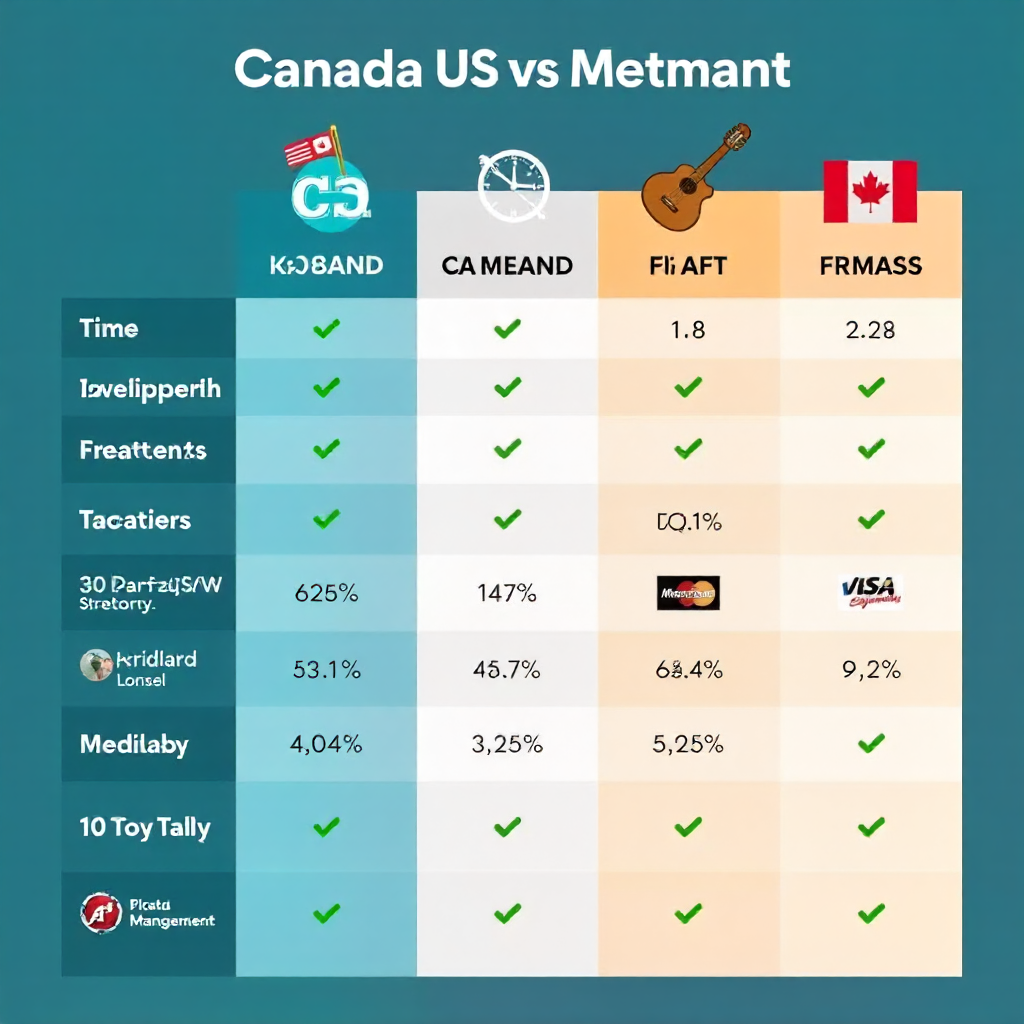
Here's the direct breakdown:
- Deposit Speed: Interac e-Transfer — under 5 minutes. U.S. ACH — instant to 1 business day. U.S. credit card (when accepted) — instant. PayPal — instant.
- Withdrawal Speed: Interac e-Transfer — 30 minutes to 24 hours. U.S. ACH — 1 to 5 business days. U.S. PayPal — 24 to 72 hours. U.S. check — 5 to 10 business days.
- Fees: Interac — typically zero from Canadian casinos. U.S. methods — variable, with some platforms charging 1–3% on certain transactions.
- Bank Acceptance Rate: Interac — near 100% at Canadian banks. U.S. credit/debit cards — estimated 20–40% decline rate depending on issuer.
- Ease of Use: Interac — one system, works everywhere in Canada. U.S. — multiple systems, availability varies by state and platform.
The numbers make the case on their own. Canada's unified approach wins on nearly every metric that actually matters to players — speed, reliability, and simplicity. It's not close.
What U.S. Players Can Learn From Canada's Payment Model
There is some good news for American players: the infrastructure for a better experience is starting to take shape. The Federal Reserve's FedNow real-time payment network — launched in 2023 and steadily gaining traction among financial institutions — has the technical capability to replicate a lot of what Interac does. Instant bank-to-bank transfers, strong authentication, no middleman. The piece that's still missing is regulatory will and banking industry buy-in specifically within the gambling context. That's a harder problem than the technology.
In the meantime, plenty of U.S. players have shifted toward cryptocurrency and digital wallets as a workaround. Bitcoin, Ethereum, and stablecoins like USDC move fast and skip bank-level friction entirely. Several licensed U.S. platforms now accept crypto for both deposits and withdrawals. It's not a clean solution — volatility and tax reporting genuinely add complexity — but in terms of speed and acceptance rates, it's currently the closest American players can get to the Interac experience.
Tips for Cross-Border Travelers and Dual-Country Players
If you're an American traveling to Canada and thinking about playing on a provincially licensed platform, there's decent news: many Ontario-regulated sites do accept international players with the right documentation. But Interac is tied to Canadian bank accounts, so you'll almost certainly need to fall back on a credit card or e-wallet. Currency conversion fees can run 2–3% per transaction — factor that into your bankroll before you start, not after.
Canadians heading into U.S. casino markets hit the reverse wall. Interac won't work at American platforms, and Canadian credit cards sometimes trigger extra verification steps. A prepaid travel card loaded in USD tends to be the smoothest workaround, or PayPal if the platform supports it. Either way, check the payment page before you deposit — surprises at the cashier are avoidable.
One tip that applies to both sides: load a small amount into a digital wallet like Skrill or Neteller before you travel. Both services work across Canadian and U.S. markets and can bridge the gap when your main payment method isn't an option. It's a small bit of prep that saves real headaches on the road.
Choosing the Right Payment Method — Final Recommendations
For Canadian players, the call is easy: use Interac wherever it's available. It's the fastest, cheapest, and most secure option on the table, and in 2026, support for it across licensed Canadian platforms is essentially universal. If a casino you're considering doesn't offer Interac, that's a legitimate red flag — not something to brush past.
For American players, the honest advice is to prioritize platforms that offer PayPal or real-time ACH banking where it's available, keep Play+ prepaid cards as a solid backup, and seriously consider crypto if withdrawal speed is your priority. And avoid any platform in 2026 that's still leaning on paper checks as a primary payout method — waiting two weeks for your money when better options exist isn't acceptable.
The broader point is this: Canada has built something genuinely worth paying attention to with its Interac-anchored payment ecosystem. It shows what's possible when banking infrastructure, regulatory clarity, and platform adoption all point in the same direction — faster deposits, faster withdrawals, lower fees, fewer headaches. The U.S. market is moving that way, but the gap is still real. Until it closes, understanding your options on both sides of the border is the most practical thing you can do.